Listening to the Deaf

Learning that your child has hearing loss can be a very emotional discovery.

Parents are often overwhelmed with many emotions. They must quickly learn a great deal about how to best help their child. Oftentimes, parents don’t know where to turn for information and support when they learn their child is deaf or hearing impaired.

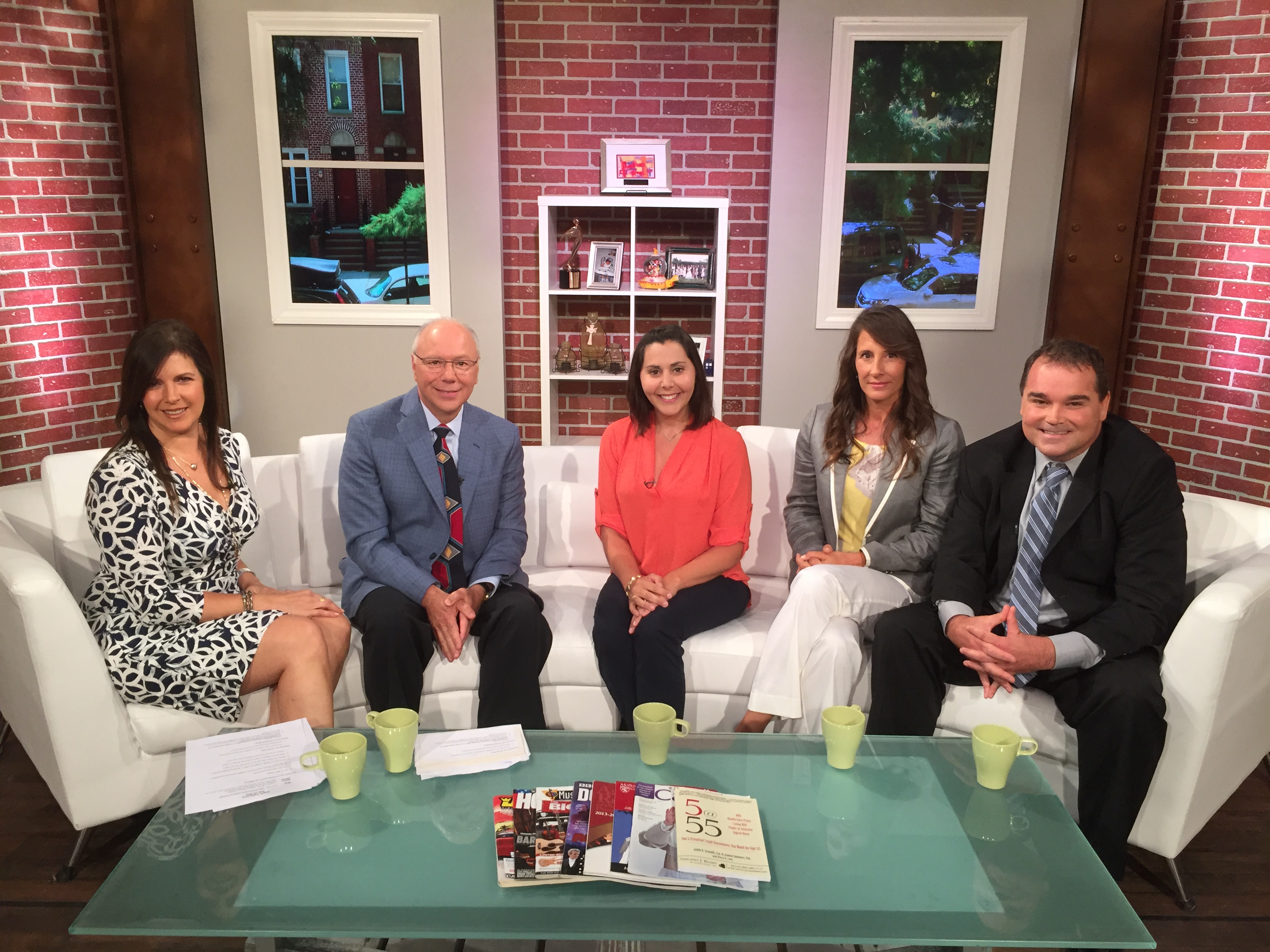
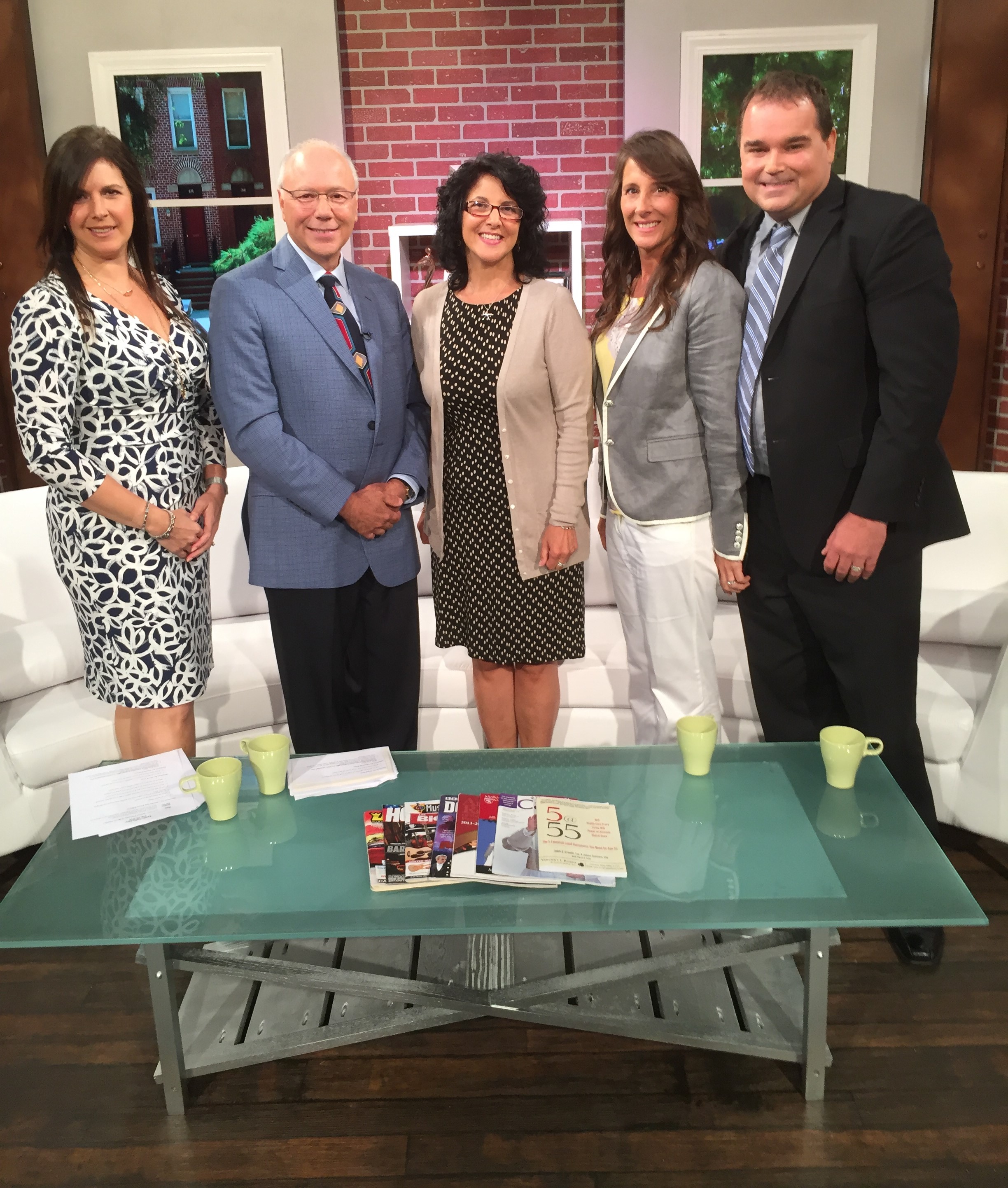
On this brand new episode of Family Comes First “Listening to the Deaf,” we learn about two families who each have a child with hearing loss, and hear from the schools that support them.

Parents Know Best

Parents and educators know that children with Special Needs have gifts and talents and it’s just a matter of unleashing their full potential and making sure that parents and teachers have the right information, tools, and support to help the children flourish.On this episode of Family Comes First, “Parents Know Best” we meet with Christian and Terrie Killoran. Christian and Terrie have a son, Aiden who has Down syndrome. On the show, they share with us the story of their son, Aiden and their battle with the school district to allow Aiden to continue his education at the school that would be the normal path for him.

IMG_3572Aiden had been attending elementary school and his parents were planning on sending him to middle school in the same district however, that school does not have a program for children with special needs and will not accept him. This means that Aiden will have to attend a school in a neighboring community, one separate from his classmates and siblings. The larger issue they discuss is his future success within his community. As parents, they want Aiden to flourish in his community by getting a job once he graduates, developing relationships with people in his community and being successful as a contributing member of the community. They fear if he attends school outside of his community he will not have these opportunities.

During this show, we also skype with Sara Hart Weir, the Executive Director at the National Down Syndrome Society. Sara explains, “…people with Down Syndrome can live long healthy lives when they are given the extra support when they’re able to go to an inclusive school , like what we’re pushing for Aiden, they’re able to work in the community, go to post-secondary education and pursue their own hopes, dreams and aspirations, just like everyone else.”

Elizabeth Einhart, a special education teacher with a masters in special education joins us to give the educators perspective, having the knowledge of what is necessary to educate children with special needs. Elizabeth clarifies how in an integrated class setting, individualized education plan’s (IEP’s) helps provide some additional support to bridge the education of a student with special needs to the general curriculum. She also expresses how the whole point of having an integrated classroom setting is to expose the children to real life experiences and teach them about compassion and kindness.

Adrienne Arkontaky, a special needs attorney with the Cuddy Law Firm provides further IMG_3575insights and clarification on these issues discussed during the show.  Adrienne explains, “The responsibility of the school district is to provide a free appropriate public education at no cost to the families and what the Individuals with Disabilities Education Act says is that the school districts must provide an education in the lease restrictive environment and to the greatest extent possible in a community school.”

Every child is unique. Parents need to be engaged and proactive to ensure their child with special needs is afforded every opportunity to realize their full potential.

Resources

Cuddy Law Firm, P.L.L.C
Cuddy Law FirmCuddy Law Firm, P.L.L.C is a Special Education Law Firm who specializes in providing comprehensive legal services to families of individuals with special needs.


National Down Syndrome Society

ndss-logoThe mission of the National Down Syndrome Society is to be the national advocate for the value, acceptance and inclusion of people with Down syndrome.

Miracles Among Us

As a parent, from the moment your child enters the world, you strive to provide the best life for them. There are always obstacles to overcome in day-to-day life. However, when a parent learns their child is medically fragile, these day-to-day activities become additionally challenging. Due to medical research and advances, many of these children can live at home, but not without significant challenges to overcome.

In this episode, we meet Jenny and Darin Iacobelli. Jenny and Darin’s daughter, Nola was diagnosed with Cardiofaciocutaneous Syndrome at just 1 year old. The disease is very rare—only 400 children in the world have been diagnosed. The Iacobelli’s are able to maintain their family and lifestyle despite the stress and challenges. They are truly role models to families everywhere.

Resources

Angela’s Legacy

In 1992, Angela’s House, a non-profit organization, was created by Bob and Angie Policastro; their goal was to improve the lives of medically frail children and their families. Angela’s House currently offers a wide variety of services to support medically frail children, both at home and in a group home setting.

We kick off this brand new season of Family Comes First™ by visiting with the founder and Executive Director of Angela’s House, Bob Policastro, and Anne Bingham, whose daughter is a resident of Angela’s House in Smithtown.

Bob shares with us how, 23 years ago, when his daughter, Angela, was born, he saw the lack of places and resources that could provide the proper care for medically frail children in Long Island, NY. Angela’s House was created in his daughter’s memory to ensure children receive the proper care at home and don’t need to be institutionalized due to lack of resources.

Anne explains how, prior to arriving at Angela’s House, horrific images came to mind when she thought about putting her daughter in a home. After visiting the house, she realized how beautiful and inviting it was, with loving and caring staff.

Resources

In 1992, the non for profit Angela’s House, was created to offer families and professionals an agency to call to help medically frail children and their families. Angela’s House has helped to simplify home care options for families by coordinating the extensive array of services needed to support medically frail children at home.

A Legacy of Inclusion

For more than 100 years, the Girl Scouts has remained steadfast in its mission to help girls build courage, confidence, and character, and go on to make the world a better place. Many women can relate to a time in their childhood when they wanted to join a local Girl Scout troop.

We visit with Girl Scout troop leader, Edith, and her daughter, Linda. Edith shares her motivation to start a Girl Scout troop for girls like her daughter, who has special needs. Using her Special Ed background, Edith helps troop members succeed by taking an activity and breaking it down so it’s easier for the young girls to achieve. Edith is a role model for parents everywhere.

Click Here for Full Transcript

Resources

girl scouts

Girl Scouting builds girls of courage, confidence, and character, who make the world a better place.

Girl Scouting In Nassau County started in 1917. A non-profit organization, Girl Scouts of Nassau County is chartered by GSUSA to develop, maintain and administer Girl Scouting in Nassau County. The Council, 1 of 112 in the United States, serves girls and adults through 36 local geographic Girl Scout Associations throughout all of Nassau County’s school districts.

2015-04-07_092443

TAPA believes that every child has strengths that can be used as a springboard to learn new skills which can enhance each child’s personal sense of accomplishment.

At TAPA, the teachers use a wide variety of teaching methods to accommodate all styles of learning.

The primary goal of TAPA’s classes is for the children to experience the joy of dance, drama, art, and music. There are many other benefits to the children who participate including improvement in coordination, overall fitness, focus, listening, balance, self-esteem, self-expression, rhythm, and musicality.

The Alpert Family: Young Adults with Special Needs…the Housing Crisis

Millie Alpert is the mom of twin sons with high functioning Autism who are now in their twenties. Millie and her husband have been strong advocates for Brian and Chris both educationally and socially. Although the boys can function on their own, with some guidance, Millie and her husband are worried about the future and what will happen to the boys when they are not around to take care of them. Both of the boys live at home right now and have part time jobs when they can find work.Their sister (Nina) is married and lives in Pennsylvania with her husband. Millie doesn’t want her daughter to have to deal with this issue.

Millie will talk about her struggle to find appropriate housing for the boys. Children such as Brian and Chris don’t fit into the “typical” group home situation on LI, or the day-hab programs because they are so high functioning. This  population simply falls through the cracks.

Millie would like to know that there is a suitable place for the boys before she and her husband are no longer capable to care for them.

Resources

Russo Law Group

At SLCD, our mission is to identify children with language and communication disorders early and provide educational programs which will prepare them for a world filled with words, sentences, stories and messages. Language is a symbol system; it provides the means to reach out to the world. It is the most important skill that a child must learn early in life. Language provides the foundation for socializing, reading, questioning, writing and thinking.

At SLCD, our mission is to identify children with language and communication disorders early and provide educational programs which will prepare them for a world filled with words, sentences, stories and messages. Language is a symbol system; it provides the means to reach out to the world. It is the most important skill that a child must learn early in life. Language provides the foundation for socializing, reading, questioning, writing and thinking.

The Kooper Family: Caring for a Sibling with Special Needs

People with disabilities are living longer than ever before, outliving their parents. Over 65% of adults with mental illness and 80% of adults with developmental disabilities live with their parents, most of who are in their 60s, 70s and 80s.

When a child is born with special needs it’s usually the parents that bear the responsibility for that child. But what happens when the parents are no longer living or able to take care of their child? Is it then the siblings’ responsibility? Are they available, willing and able?

Our show takes a look into the lives of the Kooper Family. Rebecca Kooper is a loving and caring sister to her brother, Billy. For a time she not only had to see to her brother’s needs but also the needs of her father, Max who had Alzheimer’s. Rebecca became Billy’s guardian after the death of her parents.

Not only do we meet Rebecca Kooper, we also have the input of Aaron Liebowitz, the Executive Director of Adults and Children with Learning and Developmental Disabilities (ACLD) and one of my law firm’s partners, Frank L. Buquicchio who will share their insights about the services available for adults with special needs as well as the specifics involved in special needs planning.

In my special needs law practice, we meet with many families who plan for the future but unfortunately many more deal with these issues in crisis. It all starts with family and the relationships that are created from birth. When the parents pass away or are in failing health, the siblings or one of them will be asked to step up to the plate.

This is the time when the siblings are truly tested. I have seen the love and dedication of siblings for their brother or sister with special needs, helping their brother or sister live with dignity.

It truly takes a village to navigate life in every family. There are personal, financial and legal issues that all need to be dealt with.

FAMILY truly does Come First.

Click Here For Full Transcript

Resources

The mission of ACLD is to support the pursuit of an enviable life for people with developmental disabilities.

The Atlbacker Family: Caring for a Medically Fragile Child

Until the 1980s, medically fragile children were most often cared for in hospitals and then institutions. Deinstitutionalization, which started with Willowbrook, resulted in children being moved into community settings. In addition, advances in healthcare technology have enabled more children with special needs to leave hospitals.

More and more children are leaving hospitals which puts extreme pressure on these families to provide for their children who require more medical equipment and 24 hour specialized care. This all comes at a very high cost, emotionally, physically and financially.

Our show takes a look into the lives of the Altbacker Family. You will meet Liz and Chris Altbacker and their three beautiful children, Kiera, Sydney and Timmy. Their oldest daughter, Kiera has multiple challenges that require constant medical care. She is “medically fragile.”

The Altbackers brought Kiera home and their lives have never been the same.
Not only do we meet the Altbacker Family, we also have the privilege of hearing from Bob Policastro, the Founder of Angela’s House, and one of my law firm’s partners, Frank L. Buquicchio, who shares their insights about services and resources including specifics involved in special needs planning.

The topic of this episode is very personal for me and my wife as we brought our medically fragile daughter, Theresa, home to live with us. When a child has profound disabilities and complex medical needs, providing the needed round-the-clock care can be exhausting and overwhelming. Though it sometimes may seem daunting at times, with the love and support of family, children who are medically fragile children can grow and thrive at home. The Altbacker family shows all of us that a loving family is often the best medicine.

When my daughter was born, there was no Angela’s House that helps care for these children living at home with parents or in special homes that offer 24 hour nursing support. Today, with the help from organizations like Angela’s House families can continue to provide a loving home for their children.

In Theresa’s honor, we founded the Theresa Foundation which supports music, dance, art and recreation programs and have opened the Theresa Academy of Performing Arts for children with special needs in Lido Beach, New York. Find out more by visiting www.TheresaFoundation.org.

We are ALL one big family and we must do our best to help each other. Learn more about Angela’s House at www.angelashouse.org and for more information on resources for special needs visit www.VJRussoLaw.com.

Click Here For Full Transcript

Resources

In 1992, the non for profit Angela’s House, was created to offer families and professionals an agency to call to help medically frail children and their families. Angela’s House has helped to simplify home care options for families by coordinating the extensive array of services needed to support medically frail children at home.